Aliens: Fireteam Elite 2 How to Play
The core loop, difficulty ladder, and squad rules every marine needs before the first drop.
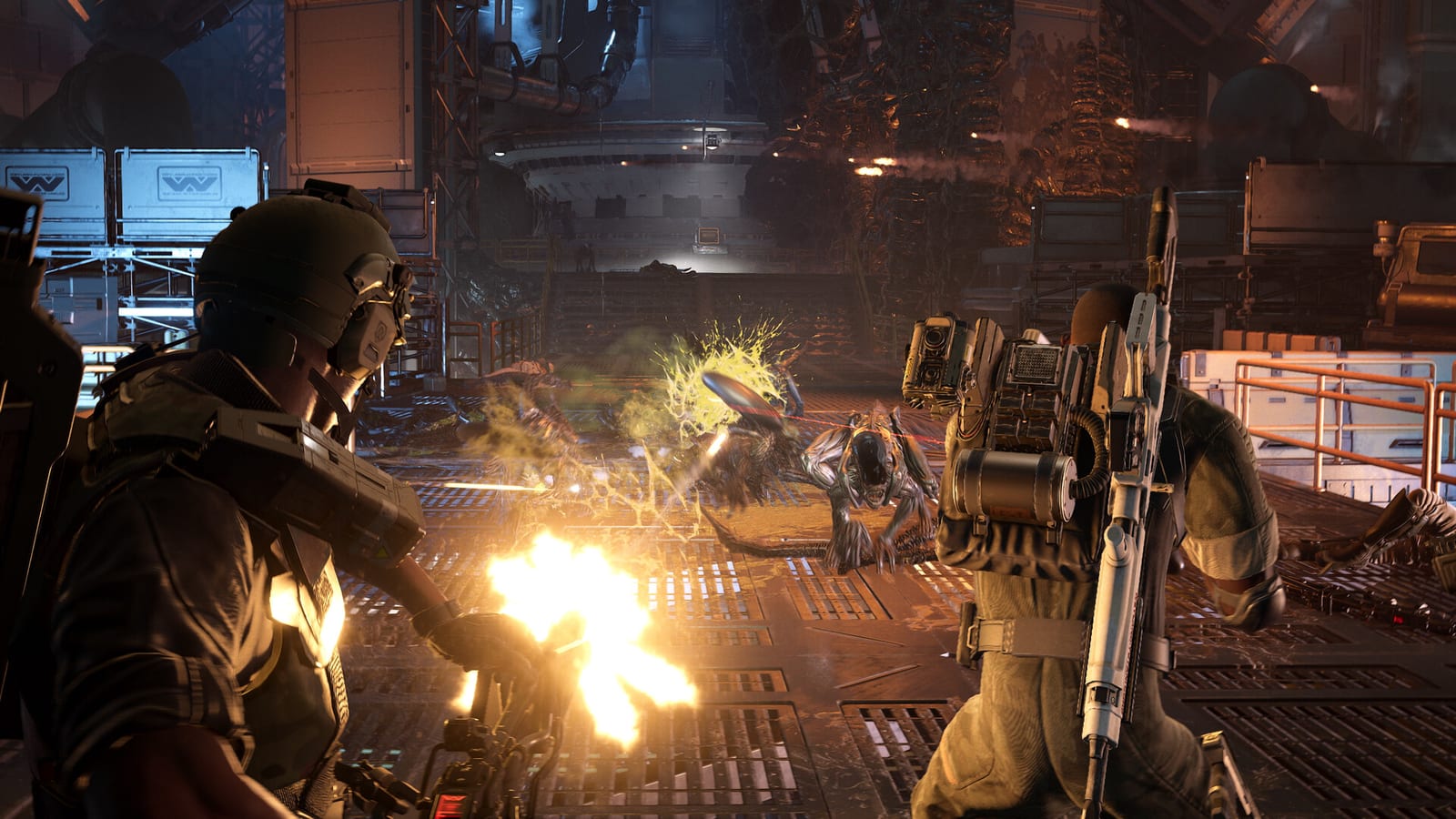
Aliens: Fireteam Elite 2 is a four-player cooperative third-person shooter. You pick a class, kit a primary plus a signature tool, drop into a linear campaign mission or a Horde map, and fight Xenomorphs, Pathogen creatures, synthetics, and combat automatons. This page is the rules-of-the-road guide. For your very first session, start with Getting Started. For bindings, see Controls.
The fireteam
Squad size is four, up from three in the first game. Empty slots fill with synthetic companions named Alpha, Beta, and Gamma. Those androids revive, shoot, and hold space, but they are not a substitute for a human Medic on Intense and above. Patch 1 rebalanced companion bots so they do not burn through heals as quickly on higher difficulties, and it restored companion-bot perks that had stopped working in multiplayer.
Crossplay is on from day one across Steam, Epic, PlayStation 5, and Xbox Series X|S. Sessions are peer-to-peer; Patch 1 added region-based matchmaking to improve host quality. A Nintendo Switch 2 version is planned for fall 2026 and is not part of the launch crossplay pool.
Difficulty ladder
There are five tiers: Casual, Standard, Intense, Extreme, and Insane. Insane unlocks after you finish the campaign on any other difficulty. Hidden cache drop rates and high-stat weapons scale hard with the upper tiers — Intense and above is where many late guns live, not in the requisition shop.
Play Casual to learn rooms and class abilities. Standard is the honest co-op default. Intense is where friendly fire, flanking Xenomorphs, and ammo discipline start to decide runs. Extreme and Insane punish isolated marines; do not take them into matchmaking without a plan. Achievement hunting asks you to finish every campaign on Casual or higher, plus one mission on Intense, Extreme, and Insane — see Achievements.
Mission loop
- Choose a campaign or Horde map and a difficulty.
- Lock a class and a loadout. Primaries are flexible; signature tools still define the job. Sidearms are customisable. Fully upgraded guns gain augments.
- Optional Challenge Cards rewrite the mission (sidearms only, extra damage taken, exploding corpses) in exchange for bonus requisition and, on high-rarity cards, extra weapon or attachment drops.
- Complete objectives, ping threats, revive before the swarm finishes a downed marine.
- Return to the hub, spend requisition, slot attachments, and level the kit.
Campaigns are named Prologue, Rescue and Recovery, Boarding Party, Rock Bottom, Ancient Anomaly, and Final Endeavor. Walk them in Campaign Walkthrough. Horde is available from mission select without finishing the story; survival tactics live in How to Beat Horde.
Combat rules that matter
Stay moving. Standing still in a hive corridor is how Facehuggers and Crushers win. Weak points exist — Hunter’s Puncture creates extra ones — but explosive conversions in Patch 1 explicitly cut weak-point value when you turn bullets into blasts. Thermal damage melts Xenomorphs; electric is weaker into chitin and stronger into synthetics. Pathogen enemies sit in between and punish fireteams that bring only one element.
Cover works, but Patch 1 spent a long section fixing jitter, wall-firing at cover edges, and mantle bugs. Do not trust a pixel-perfect head-glitch the way you would in a competitive shooter; the swarm will path around you. Melee and dive-rolls break grapples. Sirens are low threat alone and high threat if you let them call the room.
Roles, not heroes
A four-marine squad wants coverage, not four copies of the same kit:
- Marauder clears rooms and deletes heavies with rockets and the Blast Cannon.
- Duelist holds two primaries and is the flexible DPS seat — explosive perks are actually worth reading after Patch 1.
- Machinist owns turrets, the Bodyguard drone, and plasma lanes.
- Hunter slows prey and opens weak points.
- Medic keeps people standing; there are no cheap mass revives if the whole squad drops.
- Specialist is the endgame mixer. Unlock it by progressing the other five — How to Unlock Specialist.
For ranked picks, use the Classes hub and the class tier list. For enemy-by-enemy tactics, use the Enemy dossier.
Between missions
Spend requisition on guns and attachments before cosmetics. Level kits; a rank-10 kit is an achievement in itself. Collect hats, decals, and augments if you care about completion, but do not let the collection screen delay a difficulty step you are ready for. Voice chat still matters more than any perk grid. If in-game voice drops in a mixed-platform party, restart once — Patch 1 lists a cross-platform voice fix, but peer-to-peer sessions can still wobble.
Frequently Asked Questions
Quick answers to the most common questions about Aliens: Fireteam Elite 2.
Can I play solo?
Yes. Synthetic companions fill empty slots. Solo is comfortable on Casual and Standard. Intense and above expect human coordination, even after Patch 1's companion-heal rebalance.
Do Challenge Cards change loot?
High-rarity cards that promise a bonus weapon or attachment on success override the normal drop table for that extraction. They also add risk. Read the card before you lock it.
When does Insane unlock?
After you complete the campaign on any other difficulty. It is not available as a first-run setting.
Is this the same as the 2021 game?
No. Fireteam Elite 2 rebuilds classes, moves to four-player squads, adds customisable sidearms and deeper perk grids, and ships a new campaign plus Horde maps. Guides for the first game do not apply.
Where should a new player go next?
Read Getting Started, pick Marauder or Duelist, finish Prologue on Casual or Standard, then come back here before you touch Intense.